Nocturne
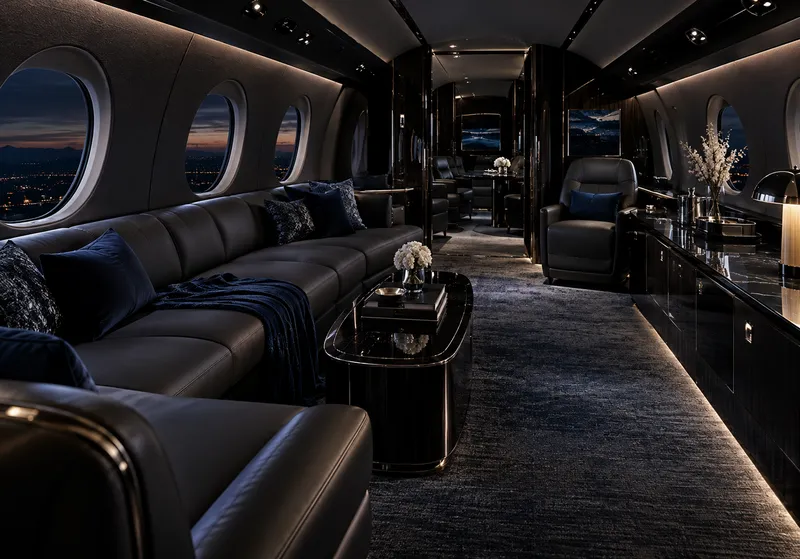
A composed, evening-toned cabin balancing deep leather, satin metal and controlled points of light. Ideal as a conversation around tonal depth and restrained contrast.
A collection is a starting point for conversation, not a fixed specification. These directions explore distinct combinations of leather, textile, natural tone and architectural contrast for private aviation interiors.
Discuss a material directionSelect a design mood to explore an interior direction. Every palette can be adjusted to the aircraft, its existing cabin elements and the preferences of its owner.

A composed, evening-toned cabin balancing deep leather, satin metal and controlled points of light. Ideal as a conversation around tonal depth and restrained contrast.

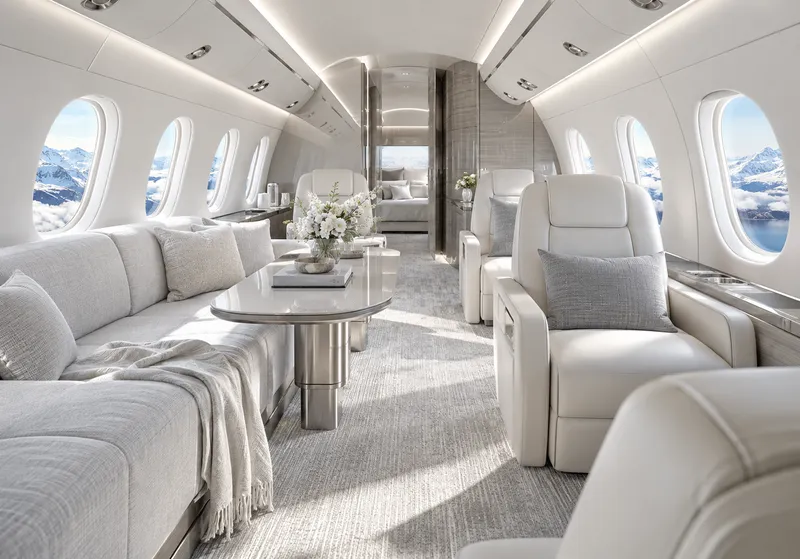
A calm palette of pale upholstery, muted greys and reflective accents. Gentle material transitions offer the cabin an open and airy visual character.

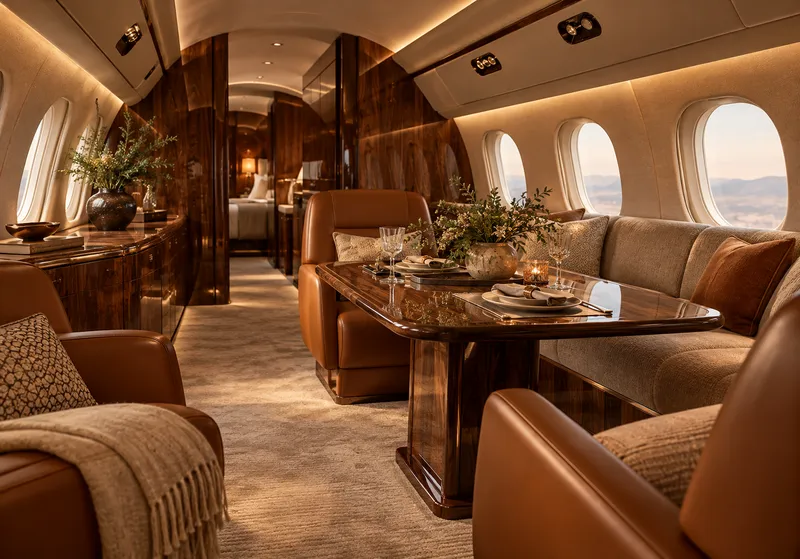
Rich brown leathers and wood tones bring a sense of warmth without visual heaviness. Texture becomes the principal decorative element across seats and cabinetry.

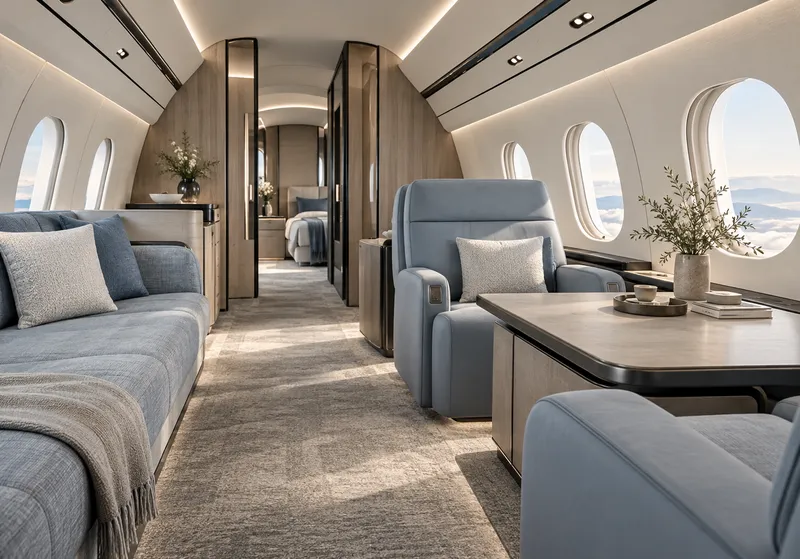
Blue-grey textiles, lightly grained wood and precise dark outlines create a contemporary cabin aesthetic inspired by the changing tones beyond the window.
Materials have to be understood together. A leather's undertone changes beside wood; a metallic edge reads differently in warm or cool light; a textile affects how a seat feels as much as how it looks.
Explore design servicesGrain, tone, perforation detail and tactile character.
Surface structure, visual softness and tonal variation.
Grain direction, contrast and sheen across cabinetry.
Edge accents, hardware appearance and continuity.
Collection names describe creative directions rather than preconfigured, approved products. Actual materials, components and installations must be selected with the particular aircraft and its relevant requirements in mind.